The Timeless Tale of Lockets: A Journey Through History
There’s something deeply personal about a locket. Unlike other pieces of jewelry that simply adorn, a locket holds secrets, preserves memories, and keeps loved ones close to the heart. This intimate piece of jewelry has captivated humanity for centuries, evolving from ancient amulets to today’s cherished keepsakes. Let’s explore the fascinating history of lockets and discover why they remain as meaningful today as they were thousands of years ago.
Ancient Beginnings: More Than Decoration
The story of lockets begins long before the elegant Victorian pieces we often envision. Ancient civilizations recognized the power of wearing small containers close to the body. Egyptians wore amulets that were often solid pieces but some wore small containers with protective scrolls and religious inscriptions, believing these talismans would ward off evil and bring good fortune. These weren’t merely decorative, they served as portable shrines, connecting the wearer to the divine and the departed.
Similarly, ancient Romans carried small containers called bullae, typically worn by children as protective charms. These hollow pendants often contained amulets or prayers, embodying the belief that what we carry close to our hearts can shield us from harm.
The Medieval Era: Relics and Romance
During the Middle Ages, lockets took on profound religious significance. Pilgrims and the devout wore reliquary pendants containing fragments of saints’ bones, pieces of the True Cross, or other sacred relics. These weren’t simple acts of devotion, possessing a relic was believed to grant divine protection and bring the wearer closer to heaven itself.
This era also saw the emergence of lockets as tokens of romantic love. Knights departing for the Crusades would carry locks of their beloved’s hair, intertwined with their faith and their longing for home. The locket became a bridge between the spiritual and the romantic, between absence and presence.
The Renaissance: Artistry Meets Emotion
The Renaissance brought unprecedented artistry to locket design. Skilled craftsmen created elaborate pieces featuring intricate engravings, enamel work, and precious gemstones. These weren’t mass-produced trinkets but individual works of art, each telling its own story.
Poison rings and lockets also emerged during this period, though their romantic association in popular culture often overshadows their practical (if dark) purposes. More commonly, Renaissance lockets held miniature portraits painted on ivory or vellum, allowing the wealthy to carry images of loved ones during an era before photography.
The Georgian Period: Mourning and Memory
The 18th century Georgian era elevated lockets to essential mourning jewelry. Death was an ever-present reality in daily life, and lockets became vessels for grief and remembrance. People wore lockets containing locks of hair from deceased loved ones, often woven into elaborate patterns and combined with seed pearls, which symbolized tears.
These mourning lockets were deeply personal memorials, allowing the bereaved to literally keep a piece of their loved one with them always. The practice reflected a cultural approach to death that embraced rather than avoided mourning, making grief visible and honored.
The Victorian Era: The Golden Age of Lockets
If any period could be called the golden age of lockets, it would be the Victorian era. Queen Victoria herself was an enthusiastic wearer of sentimental jewelry, and her influence shaped an entire generation’s approach to personal adornment. Following Prince Albert’s death in 1861, Victoria wore mourning jewelry containing his hair, popularizing memorial lockets throughout her realm.
Victorian lockets became increasingly sophisticated and varied. Jewelers created pieces in every price range, making lockets accessible to the growing middle class. Hair jewelry reached its zenith during this period, with intricate braiding techniques creating stunning designs from human hair. Lockets might contain photographs (a new technology), paintings, locks of hair, or even pressed flowers from meaningful occasions.
The language of lockets became complex and nuanced. A locket worn on a long chain meant one thing, while one on a velvet choker suggested something else entirely. The choice of materials, from gold to jet to seed pearls, conveyed specific messages about the wearer’s emotional state and social position.
The 20th Century: Evolution and Endurance
As photography became widespread and affordable, photo lockets surged in popularity. Soldiers leaving for World War I and World War II carried lockets with pictures of sweethearts and family, a tradition that continued through every subsequent conflict. These small pieces of jewelry provided comfort and connection across vast distances and incomprehensible circumstances.
The Art Nouveau and Art Deco movements brought new aesthetic sensibilities to locket design. Flowing, organic forms gave way to geometric patterns and bold, streamlined shapes. Despite changing fashions, the fundamental appeal of lockets remained constant: the desire to keep loved ones close.
Mid-century saw lockets become popular gifts for milestone moments, particularly sweet sixteens, graduations, and weddings. Gold heart-shaped lockets became especially iconic, representing both romantic love and familial bonds.
Lockets Today: Timeless in a Digital Age
In our modern world of smartphones and digital photo albums, physical lockets might seem outdated. Yet they’ve experienced a remarkable resurgence in recent years. Perhaps it’s precisely because we’re surrounded by endless digital images that a single photograph, carefully chosen and privately held, feels so meaningful.
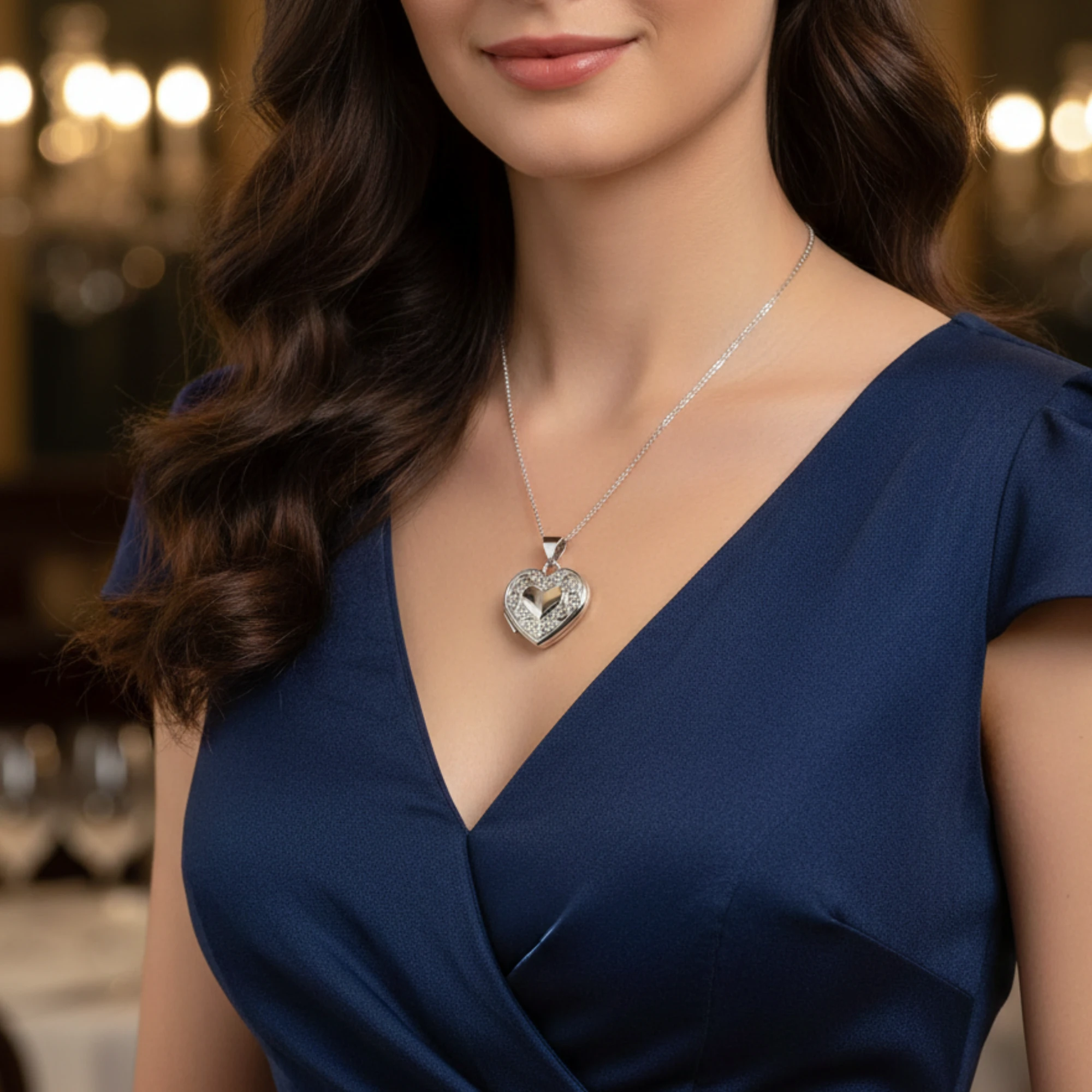
Contemporary locket designs honor tradition while embracing modern aesthetics. You’ll find minimalist sterling silver circles alongside ornate vintage-inspired pieces, lockets that hold ultrasound images alongside those containing grandparents’ wedding photos. Some modern lockets incorporate technology, featuring tiny digital screens or QR codes, while others return to the simplest forms, classic and understated.
Why Lockets Endure
What explains the locket’s journey from ancient amulet to modern keepsake? The answer lies in something fundamental about human nature. We want to carry our loved ones with us, to have something tangible that represents intangible bonds. A locket transforms jewelry from mere decoration into something deeply personal, a secret kept close to the heart.
In an age of constant connectivity, there’s something powerful about a connection that’s private, physical, and permanent. You choose what goes inside your locket, and that choice is yours alone. It might be a photograph of a child taking their first steps, a beloved grandparent, a wedding day, or even a cherished pet. That small space holds entire worlds of meaning.
From ancient Egyptian amulets to Victorian mourning jewelry to contemporary designs, lockets have adapted to changing times while maintaining their essential purpose: keeping love close.
Whether you’re drawn to vintage pieces with their own stories or modern designs that speak to today’s aesthetic, wearing a locket connects you to this rich tradition. You become part of a story that stretches back thousands of years, a story about love, loss, memory, and the precious people who make life meaningful.
In the end, a locket is more than jewelry. It’s a tiny treasure chest for the heart, a beautiful reminder that some things, like love and memory, are worth keeping close forever.